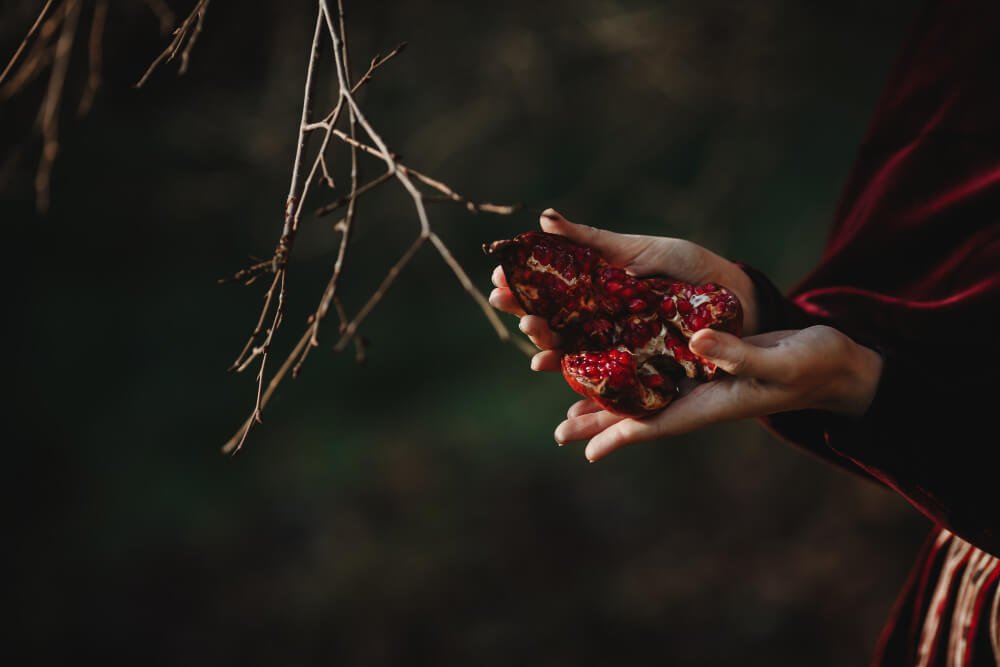
Pagan Holidays: Have you ever carved a pumpkin on October 31st, hunted for eggs in spring, or decorated a tree in December and wondered where those traditions actually started?
Most of them trace back to pagan holidays, seasonal celebrations that humans have observed for thousands of years.
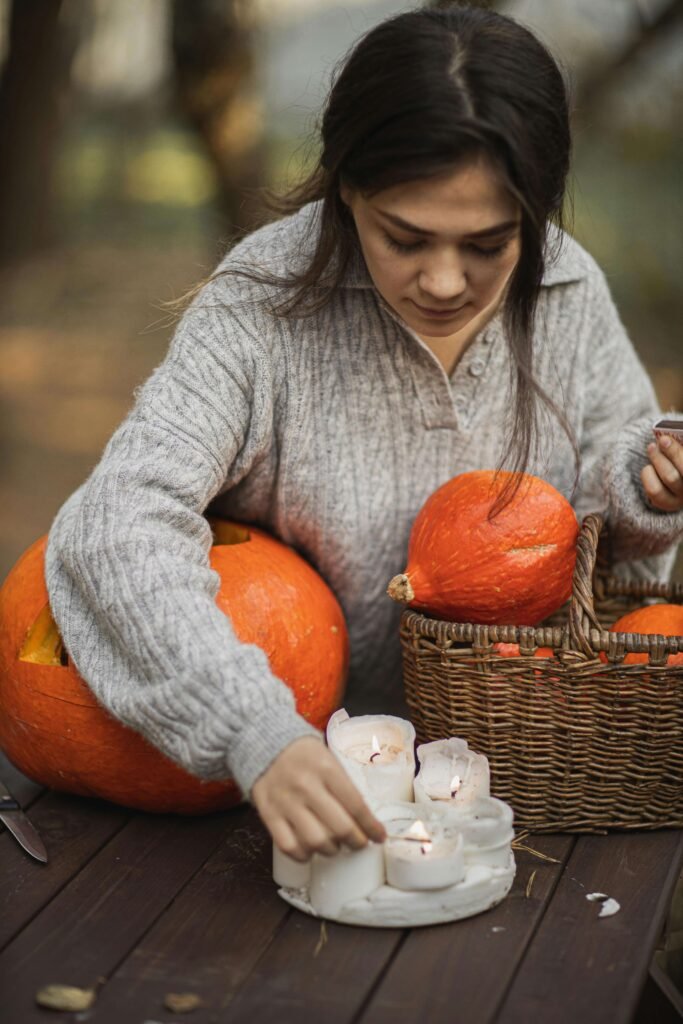
What Are Pagan Holidays?
Pagan holidays are festivals rooted in pre-Christian, nature-based religions that honored the sun, the moon, and the changing seasons.
They were not created by one culture or one religion but grew naturally from communities who lived and died by the rhythm of the earth.
Today, pagan holidays are still celebrated by modern Wiccans, Druids, Heathens, and many others who follow earth-based spiritual paths.
Many people also celebrate them without even knowing it, because most mainstream holidays we know today were built directly on top of them.
What Does “Pagan” Mean?
The word pagan comes from the Latin paganus, which simply meant “country dweller” or “villager.”
It became a label used by early Christians to describe rural people who still followed the old nature-based religions instead of converting.
Over time, it became a broad term for anyone outside the major Abrahamic faiths. Today, many people use it proudly to describe spiritual paths like Wicca, Druidry, and Heathenry.
The Wheel of the Year: The Calendar Behind Pagan Holidays
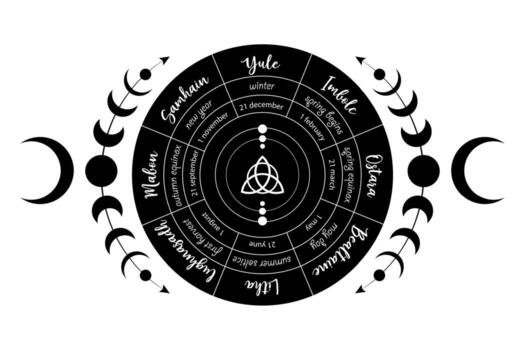
Most modern pagan holidays are organized around a framework called the Wheel of the Year, a circular calendar divided into eight seasonal festivals spaced about six weeks apart.
It tracks the sun and the seasons, marking the most important turning points of the natural year.
The Wheel blends ancient Celtic fire festivals with Germanic and Anglo-Saxon solstice traditions. While its modern form was shaped largely by the Wiccan movement in mid-20th century Britain, the individual holidays within it are far older.
The eight pagan holidays are split into two groups. The four Greater Sabbats are fire festivals tied to farming and livestock, and the four Lesser Sabbats are the solar events: two solstices and two equinoxes.
The 8 Pagan Holidays Explained
Here are the 8 pagan holidays explained clearly and in detail
1. Samhain (October 31 – November 1)
Samhain, pronounced “sow-in,” is one of the most significant pagan holidays and marks the end of the harvest and the beginning of the dark half of the year.
Ancient Celts believed the veil between the living and the dead was thinnest on this night.
People lit bonfires, wore disguises to confuse wandering spirits, and left food offerings for their ancestors.
Every Halloween tradition we know today, from costumes to jack-o-lanterns to candy, comes directly from Samhain.
2. Yule – Winter Solstice (Around December 21)
Yule marks the winter solstice, the longest night of the year, and was celebrated by Germanic and Norse peoples as the moment the sun was reborn. From this night forward, the days grow longer again.
Traditions included burning a Yule log, bringing evergreen branches indoors, and feasting with family. The Christmas tree, December 25th, gift-giving, and candles all have direct roots in Yule and the Roman solar festival Sol Invictus.
3. Imbolc (February 1–2)
Imbolc is one of the earliest pagan holidays of the new year, marking the very first signs that winter is ending. The name likely comes from an Old Irish phrase meaning “in the belly,” referring to pregnant ewes whose milk signals spring is near.
This holiday honors Brigid, the Celtic goddess of fire, healing, and poetry. The Christian feast of Candlemas and Saint Brigid’s Day on February 2nd are direct replacements of this ancient celebration.
4. Ostara – Spring Equinox (Around March 21)
Ostara is the spring equinox, the day when light and dark are equal, and it takes its name from Eostre, a Germanic goddess of dawn and spring.
It was a celebration of new beginnings, fertility, and the return of life to the earth.
Eggs and rabbits were symbols of that new life and potential. The word Easter, the Easter egg, and the Easter bunny all come from this pagan holiday.
5. Beltane (May 1)
Beltane is a Gaelic fire festival that marks the beginning of summer and the peak of the earth’s fertility. Livestock were driven between two large bonfires to cleanse and protect them before heading to summer pastures.
People danced around maypoles and celebrated the abundance of life. May Day, still observed in many countries with flowers and dancing, is a direct descendant of Beltane.
6. Litha – Summer Solstice (Around June 21)
Litha is the summer solstice, the longest day of the year and the moment the sun reaches its highest power before the days begin to shorten again. Huge hilltop bonfires were lit to honor the sun and protect communities.
Stonehenge in England is perfectly aligned with the midsummer sunrise, and thousands still gather there every year to mark it. This is one of the oldest continuously observed of all pagan holidays.
7. Lughnasadh / Lammas (August 1)
Lughnasadh, pronounced “loo-nah-sah,” is the first harvest festival on the Wheel of the Year, named after the Celtic god Lugh. Communities gathered to bake the first bread of the season, give thanks for the harvest, and hold games and feasts.
Christians later renamed it Lammas, from the Old English hlafmaesse meaning “loaf mass.” County fairs, harvest festivals, and Thanksgiving traditions all echo the spirit of this ancient pagan holiday.
8. Mabon – Autumn Equinox (Around September 21)
Mabon is the second harvest festival and the autumn equinox, the mirror of Ostara, when day and night are equal once more. It is a time to give thanks for what the earth has provided and to prepare for the coming darkness.
Feasts, apple picking, and offerings to the land are traditional ways to observe it. The spirit of Mabon is very easy to recognize in modern Thanksgiving celebrations.
How Pagan Holidays Survived Into Modern Times
When Christianity spread through Europe, Church leaders faced a real problem: people had celebrated these seasonal festivals for generations and were not willing to stop.
Rather than eliminating pagan holidays entirely, the Church placed Christian feasts on the same dates and absorbed many of the existing customs.
This is why Christmas falls near the winter solstice, Easter follows a lunar spring calendar, and Halloween looks almost identical to Samhain. The holidays were not erased, only rebranded.
Who Celebrates Pagan Holidays Today?
Modern paganism is one of the fastest-growing spiritual movements in the Western world, with Wiccans, Druids, Heathens, and other practitioners actively observing all eight pagan holidays throughout the year.
Celebrations range from formal outdoor rituals to simply lighting a candle and cooking a seasonal meal.
Many people who do not follow any specific religion also observe the solstices and equinoxes as a way to stay connected to the natural world. You do not need to belong to any tradition to find meaning in marking the turning of the seasons.
Quick Reference: All 8 Pagan Holidays
| Holiday | Date | Theme | Modern Echo |
|---|---|---|---|
| Samhain | Oct 31 – Nov 1 | Death, ancestors | Halloween |
| Yule | ~Dec 21 | Rebirth of the sun | Christmas |
| Imbolc | Feb 1–2 | First signs of spring | Candlemas |
| Ostara | ~Mar 21 | Renewal, fertility | Easter |
| Beltane | May 1 | Summer, fire | May Day |
| Litha | ~Jun 21 | Peak of the sun | Midsummer |
| Lughnasadh | Aug 1 | First harvest | Lammas |
| Mabon | ~Sep 21 | Second harvest | Thanksgiving |
Common Questions About Pagan Holidays
Are pagan holidays evil or anti-Christian?
No. Pagan holidays are nature-based celebrations focused on the seasons, the sun, farming, and community gratitude. Most of the traditions tied to Christmas, Easter, and Halloween came directly from these ancient festivals.
Do you have to be Wiccan to celebrate pagan holidays?
Not at all. Many people outside of any religious tradition observe the solstices and equinoxes simply to stay connected to the natural world. There is no single belief system required.
What is the most important pagan holiday?
It depends on the tradition, but Samhain is widely considered the pagan New Year and one of the most spiritually significant dates on the calendar. Yule and Beltane are also treated as major celebrations across many pagan paths.
Final Thoughts
Pagan holidays are not relics of a forgotten past. They are living, seasonal celebrations that shaped the way human beings have marked time for thousands of years, and they are still doing exactly that today.
The next time you hang lights in December, crack a chocolate egg in spring, or dress up on October 31st, you are taking part in traditions older than most civilizations. The Wheel of the Year keeps turning, and so do we.